
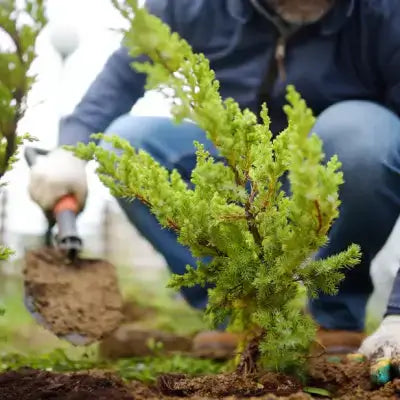
A Cut Above: How to Trim Juniper Shrubs
Each shrub within the Juniper class Juniper class as a part of the Cypress family, holds both functional and aesthetic value in a garden as well as in the landscape. As potent evergreens, they provide all year round greenery and they are still foliage deer avoid.
With their resiliency, Junipers adapt and survive an array of climates. A dualistic pain point of let's say an awful blessing, is how Junipers flourish in a scarily fast manner. Without any proper trims or maintenance, they can overwhelm their surroundings by growing anywhere between twelve to fifteen feet.
As the name suggests, Juniper shrubs do benefit from trimming. Not only does trimming help functionality, but it also improves the appearance of the Junipers. This article aims to provide the necessary tips for maintaining trimmed Juniper shrubs.
How to Trim Juniper Shrubs
Step 1: Assess Your Shrubs
The very first step of trimming a Juniper shrub is making an assessment. Are there branches that are dead? Overgrown? Misplaced? Having these minutes in line is the first step to the proper upkeep of your shrub. Make sure to check your shrub multiple times a year. This ensures that a shrub does not get overgrown, which could lead to severe over-pruning later.
Step 2: Prepare the Necessary Equipment
You will need handheld pruning shears or long-handled loppers to trim the plants. Ensure that all tools to be used are clean and sharp, as the aim is to make clean cuts that do not harm the plant.
Step 3: Cut at a 45 Degree Angle
Shrub Junipers are not the only plants that you can trim to 45 degrees. Make sure that all the limbs are cut at a 45-degree angle. When cuts are made at an angle, cut surfaces heal much quicker, and there is little chance that the plant will be infected by a pest or disease through the open cut.
Step 4: Eliminate Any Dead or Cowardly Branches
You can begin by cutting the dead or exposed branches. Cutting back bare branches helps shrubs by allowing them to release energy and use that energy to produce new and healthy growth.
Step 5: Trim the Growth that is New
Like many shrubs that are evergreen, Junipers are able to produce new growth at any time of the year. New shoots that are green are most vulnerable because they can be pinched completely. Do not trim the Junipers in late summer; that is the time of year when they are able to mature and grow, as this will keep them healthy.
Step 6: Adjust and Mold
Once you've done cutting the adolescent and dead portions of the shrub, start focusing on pruning it to your desired shape or look. With Junipers, this can mean a very geometric and structured shrub, or a more free-form look; again, it depends on your preference.
What to do with Junipers That Have Grown Excessively
Excessively grown Junipers can be very tricky. Cutting the shrub down to size and not maintaining it properly can cause the shrub to look barren and unkept due to a lack of new growth. With these types of shrubs, the most effective method of pruning is in portions.
Key Tip: During cutting, no more than 25% of the entire shrub can be cut down. Cutting more than these limits can cause stunted growth, and the entire shrub might dwindle in health.
Have in mind that junipers should not be able to grow from the limbs in the middle or from the areas that have no greenery. Having left these areas will more than likely result in dead areas and no regrowth.
If none of the tips previously mentioned work and your Junipers are beyond control, replacing the plant with a new one may be the most effective solution.
Shaping Junipers
Because they grow quickly, Junipers lend themselves well to the creation of topiary or neatly manicured hedges. All the same, if you trim too much at once, the plant may go into shock.
Years 1 and 2: In the first and second shaping years, remove half the new growth each season to help the shrub become more dense and robust.
Year 3: In the third season, you may begin to shape the shrub into your desired form. For a uniform shape, use a large rectangle of cardboard as a template.
Shaping a shrub is only half the work. Regular trimming of the edges each year is needed to keep the shape, and maintenance is essential to keep the shrub clean.
Additional Tips for Pruning Junipers
Less is More: An over-pruned plant will look unnatural, and pruning too much at once is more stressful. Take your time.
Retain the Natural Shape: Having too many straight edges, as well as being boxy or bulbous, is a very unnatural shape for junipers. You need to allow the shrub to grow.
Inspect Regularly: Junipers in excellent condition do not become overgrown, and a little pruning each season is more effective than waiting for the plant to become large. Regular inspections keep the juniper healthy.
Considered Related Plants
Although Junipers are beautiful and simple to care for, they are not the only shrubs that are great for landscaping. Other shrubs that are popular include:
-
Boxwoods: These evergreen shrubs are ideal for formal hedges and topiaries. Like Junipers, they are shaped and trimmed frequently.
-
Hollies: With their glossy foliage and bright red berries, Hollies are great for winter gardens.
-
Yews: These evergreens are highly adaptable and can be pruned to almost any shape, just like Junipers.
Need Experienced Advice? TN Nursery Plants and Documents Have Them All
For any gardener or even beginner are free to access true passion works filled with proper guidance and stiff of our caring. For example, we care for junipers, planting start, or other shrubs. Everything ranges for wide options with domains like landscape designing. One can access it online or visit for planting shrubs and nurturing them. Rather our guidance for nurturing them or the auxiliary planting order, like for sets of junipers.
FAQs
What can I do with the overgrown Juniper bushes?
Juniper bushes that are overgrown can be difficult to control. When dealing with very large shrubs, the best approach is to trim the shrub over a number of stages. Do not take off more than a quarter of the shrub at any one time, as over-trimming can create unsightly, sparse patches. If the shrub is completely unmanageable, a younger shrub may be needed in its place.
How hard can you prune juniper?
Juniper shrubs can take a lot of chopping. But with every shrub, there is a limit to what is healthy for the plant. Take care not to cut too much at once, especially towards the center of the shrub or where there are bare branches. When chopping off the pieces, also remember to keep the natural shape of the shrub, so that it doesn't look too uneven. As much as it is essential to cut shrubs, it is also essential to keep a balance to keep the health of the plant.
How to prepare juniper for winter?
Before winters arrive, we must take a few steps to prepare the shrub so it can survive the winter. The first step is watering the plant. It is best to water it before the temperature begins to freeze so as to give the roots some time to absorb water. The second step is to cut off any dead or damaged branches a plant may have. A good cover of mulch around the shrub will help the roots not freeze.
Will juniper grow back if cut down?
Juniper shrubs are capable of regrowing on the condition that they are properly pruned. If, however, a shrub is cut down to the center, or below the center, it will not be possible for that shrub to regenerate from there. When shrubs are pruned, it is best to do so in a way that will allow the plant to keep growing, more for its health than anything else.
What are the downsides of junipers?
Juniper plants Juniper plants, aesthetically pleasing as they may be, have a few downsides. First, if they were left unmanaged, they may be invasive, since they do grow at a pretty rapid pace. Then, some of the species may have aphids and spider mites. Other than these, they are fine and easy to upkeep, especially if pruning is a regular part of the plant's upkeep.
What is the lifespan of a juniper bush?
Bushes of juniper can outlive their owners, and some species even reach half a century if taken care of. Like most other plants, a juniper bush is dependent on the environment, care, and growing situations. If one of those is neglected, the bush would die sooner than expected. A specially tailored trim, keeping the bush bug and disease free, will keep the juniper bush healthy and thriving.


