Buy Live Stakes Online From a Tennessee Nursery
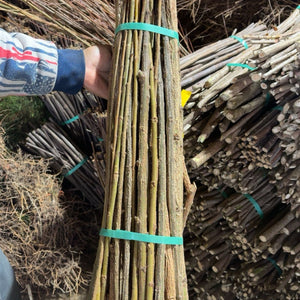
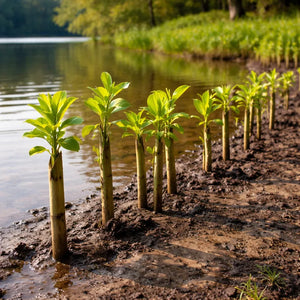
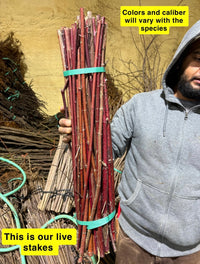
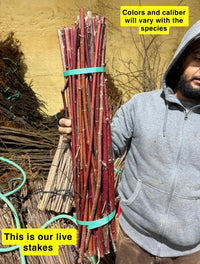
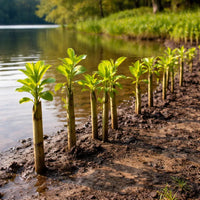
Live stakes are the fastest, most affordable way to put living roots into an eroding bank. Each stake is a dormant, leafless cutting from a native shrub or tree that roots readily from its stems. Push it into moist soil, and it grows roots below ground and leafy shoots above, turning into a new plant that holds soil in place. Contractors, conservation districts and landowners use live stakes to stabilize streambanks, pond edges, ditches and wet slopes, often at a fraction of the cost of potted plants. TN Nursery has grown and shipped plants from McMinnville, Tennessee, since 1959, so every bundle you order comes fresh from a family farm.


Showing 9 of 10 live stakes
Show more live stakes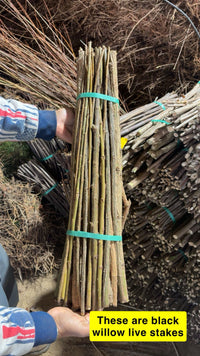
 pollinator Plants
 Butterfly Plants
 Birding Plants
 Deer Resistant Plants
 Drought Tolerant Plants
 Privacy
 Food Plot Plants
 Edible Plants
 Fragrant Plants
 Live Tree Stakes
 Saplings & Seedlings
How Live Stakes Control Erosion
Once rooted, live stakes knit soil together with a dense mat of fibrous roots, while their stems slow the flow of water along the bank. As they grow into shrubs and trees, they shade the stream, filter runoff and create habitat for fish, birds and pollinators. Live stakes work best on moist to wet sites, such as streambanks, shorelines, drainage swales and seeps, where the soil stays damp through the first growing season.
Choosing the Right Live Stakes
- How wet is the site? Willows and buttonbush handle the wettest ground, right at the water's edge. Dogwoods and elderberry suit the upper bank, where soil is moist but not flooded.
- What's your growing zone? Use the zone filter above. Our live stakes cover zones 3 through 9.
- Do you want a mix? Planting several species gives you a sturdier, more natural bank and better wildlife value than a single species.
Willow Live Stakes
Willows are the most reliable live stakes for erosion control. They root quickly and grow fast in saturated soil.
Black Willow Live Stakes
Black Willow is our best-selling live stake. This native tree grows quickly along streams and rivers, and its deep, spreading roots anchor large banks. Use it where you have room for a full-size tree.
Silky Willow and Pussy Willow Live Stakes
Silky Willow is a multi-stemmed native shrub willow that stays smaller, making it ideal for narrow streambanks and drainage ditches. Our Willow Live Stakes add early spring catkins that feed the first bees of the year.
Dogwood Live Stakes
Silky Dogwood Live Stakes
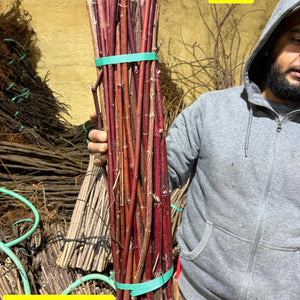
Silky Dogwood is a native shrub that roots readily from stakes and thrives on moist streambanks. Its reddish-purple stems hold soil well, and its blue fall berries feed songbirds.
Roughleaf Dogwood Live Stakes
Roughleaf Dogwood forms dense thickets that spread by suckering roots, making it excellent for stabilizing upper banks and slopes. White summer flowers feed pollinators, and white berries feed dozens of bird species.
Flowering Live Stakes for Streambanks
Buttonbush Live Stakes
Buttonbush grows in standing water and saturated soil where few other shrubs survive. Its round, white summer flowers are a magnet for bees, butterflies and hummingbirds, and ducks eat its seeds.
Elderberry Live Stakes
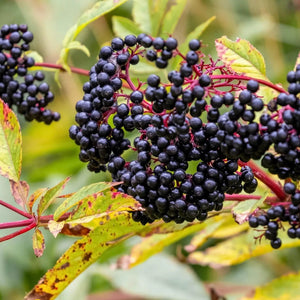
Elderberry roots easily, grows fast and produces flat clusters of white flowers followed by dark berries that birds love. Plant it on the moist upper bank rather than in standing water.
How to Plant Live Stakes
- Plant while dormant. Install live stakes from late fall to early spring, after leaves drop and before buds open.
- Keep them moist. Plant as soon as possible after delivery. If you must wait, keep stakes cool and moist, or soak the bases in water for a day or two.
- Point the buds up. Insert the angled end into the soil, with the buds facing upward.
- Plant deep. Set two-thirds to three-quarters of each stake below ground, with at least two buds above the soil.
- Make a pilot hole in hard soil. Use a piece of rebar or a dibble rather than hammering, which can split the stake.
- Firm the soil. Close the hole tightly so the stake has good contact with the soil and no air pockets.
- Space them closely. Plant stakes 2 to 3 feet apart in a staggered pattern for dense coverage.
When Live Stakes Ship
Live stakes ship dormant, during the dormant planting season from late fall to early spring, bundled and packed to stay moist in transit. See our planting instructions, or browse tree seedlings and ground cover plants for the rest of your restoration project.
Live Stakes FAQ
What are live stakes?
Live stakes are dormant cuttings from native shrubs and trees that root easily from their stems. Planted directly into moist soil, they grow roots and shoots and become new plants. They're widely used for erosion control and streambank restoration.
What are the best plants for erosion control on slopes?
On wet or moist slopes and streambanks, willows, silky dogwood, roughleaf dogwood, buttonbush and elderberry are among the best, because their dense roots bind soil quickly. On dry slopes, deep-rooted ground covers and native grasses work better than live stakes.
When is the best time to plant live stakes?
During the dormant season, from late fall to early spring, after leaves drop and before buds break. Stakes planted while dormant put their energy into roots first.
What is the success rate of live stakes?
With good planting on a moist site, survival is commonly 70% to 90%, and willows and dogwoods are usually the most reliable. Dry soil, planting after buds open, and stakes planted upside down are the most common causes of failure.
How deep do you plant live stakes?
Bury two-thirds to three-quarters of each stake, leaving at least two buds above ground. Deeper planting reaches moist soil and keeps stakes from drying out.
How far apart should live stakes be planted?
Plant them 2 to 3 feet apart in a staggered pattern. Closer spacing gives faster coverage on banks with heavy erosion.
Do you ship live stakes outside Tennessee?
Yes. We grow in Tennessee and ship nationwide.
Buying live stakes online: what to know
Start with your zone. Every live stake on this page shows the zones it thrives in, so one marked for your zone is ready for your winters and summers.
Plan for the grown-up live stake
Check the mature height on each card before you choose a spot, so every live stake has room to stretch as it grows.
Bare root, ready to plant
Bare root plants arrive freshly dug and packed ready for planting. Soak the roots, set the live stake at the depth it grew, and water it in well. Most thrive in well-drained soil and a few inches of mulch.
Ask a grower
Want a second opinion? Call our growers at 931-692-4252, or read the warranty page to see how our live-arrival guarantee works.
Live Stakes for sale: questions
Do you ship live stakes outside Tennessee?
Yes. We grow in Tennessee and ship nationwide.
How do the live stakes arrive?
Each product page says how it ships. Bare root plants arrive freshly dug and packed ready for planting.
Is there a guarantee?
Every order comes with our live-arrival guarantee. See the warranty page for the details.
How do I pick a live stake for my zone?
Set your zone at the top of the page and turn on the zone switch. Every card shows the zones the live stake thrives in.
What does live stake mean?
What is the success rate of live stakes?
How do you harvest live stakes?
Not sure which live stake is right?
Talk to a grower at our Tennessee nursery. Tell us your zone and your yard, and we will help you choose a live stake that thrives there.
Why buy live stakes from TN Nursery
Grown since 1959
A family-owned Tennessee nursery, growing plants for generations of gardeners.
Freshly dug, bare root
Dug and packed ready for planting, so roots settle in fast.
Shipped nationwide
We grow in Tennessee and ship nationwide.
Live-arrival guarantee
Every order comes with our live-arrival guarantee.