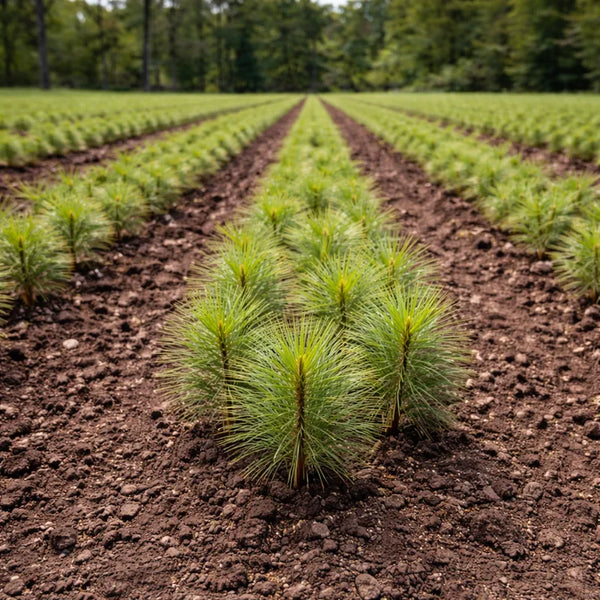
Pine Tree Species Worth Knowing
Pine trees are hardy, long-lived evergreens that add value to almost any setting. They provide year-round color, shelter delicate ornamental plants from winter winds, create privacy screens and windbreaks, and offer food and cover for wildlife. Some pines also make wonderful Christmas trees.
This guide introduces some of the most popular pine species and what makes each one special, so you can choose the right pine for your yard or property.
Varieties of Pine Trees
Eastern White Pine (Pinus strobus)
The Eastern White Pine is loved for its soft, bluish-green needles, graceful form and fast growth. It typically grows 50 to 80 feet tall and 20 to 40 feet wide in landscapes, and young trees often grow 2 to 3 feet a year. Its soft branches are popular for holiday wreaths and garlands. White Pine thrives in cooler climates (USDA zones 3 to 8) and makes a beautiful windbreak or screen.
Loblolly Pine (Pinus taeda)
The Loblolly Pine is the most widely planted pine in the South. It grows 60 to 100 feet tall and 25 to 35 feet wide and adapts to a wide range of soils, from moist lowlands to drier uplands, across the southeastern United States. Its fast growth makes it a favorite for windbreaks, borders and timber plantings.
Virginia Pine (Pinus virginiana)
Virginia Pine is a smaller native pine, usually 15 to 40 feet tall, with short, twisted needles in bundles of two. It thrives in poor, dry, rocky or clay soils where other trees struggle and is very drought tolerant once established. Its manageable size makes it a good choice for smaller properties, erosion control and Christmas trees in the South.
Spruce Pine (Pinus glabra)
Spruce Pine is a graceful southern native that grows 40 to 80 feet tall with soft, dark green needles and smooth gray bark on young trees. It is one of the most shade-tolerant pines and grows naturally in moist bottomlands from South Carolina to Louisiana, making it a lovely landscape tree and windbreak in the Deep South.
Ponderosa Pine (Pinus ponderosa)
Ponderosa Pine is the iconic pine of the American West, sometimes called western yellow pine for its golden, puzzle-piece bark that smells of vanilla or butterscotch. It grows 60 to 130 feet tall and thrives in dry, sunny climates from the Rocky Mountains to the Pacific. Its thick bark helps mature trees survive wildfires.
Longleaf Pine (Pinus palustris)
Longleaf Pine is a majestic native of the southeastern coastal plain, growing 80 to 100 feet tall or more. Its needles can reach 18 inches long, giving it a distinctive, elegant look. Young longleaf pines spend several years in a "grass stage," building deep roots before shooting upward. Longleaf pine forests support a remarkable diversity of wildlife, including the red-cockaded woodpecker and gopher tortoise.
Why Get Your Pines from TN Nursery?
TN Nursery offers a variety of pine trees, from fast-growing Loblolly and Eastern White Pine to tough, adaptable Virginia Pine. Whether you have a small yard or a large property, you'll find quality trees for windbreaks, privacy, wildlife and beauty. Visit TN Nursery to explore our pines and many other plants.
FAQs
How do I identify what kind of pine tree I have?
Count the needles in each bundle and note their length, then look at the cones and bark. For example, Eastern White Pine has five soft needles per bundle and long, slender cones, Loblolly has three needles 6 to 9 inches long, and Virginia Pine has two short, twisted needles. A local extension office or arborist can also help.
Is it illegal to take a sequoia cone?
Collecting cones, including giant sequoia cones, is prohibited in national parks and many other protected areas. On private land, ask the owner's permission. Always check local rules before collecting natural items from public lands.
How do you tell the difference between a loblolly pine and a longleaf pine?
Longleaf Pine has very long needles, up to 18 inches, and large cones 6 to 10 inches long. Loblolly Pine has shorter needles, 6 to 9 inches long in bundles of three, and smaller cones 3 to 6 inches long.
What does the Bible say about pine trees?
Pine and fir trees appear in several Bible passages, such as Isaiah 41:19 and 60:13, often as symbols of beauty, renewal and God's provision. The cedars of Lebanon, another majestic conifer, are frequently mentioned as symbols of strength and grandeur.
What is the most common pine tree in the United States?
Loblolly Pine is the most widely planted pine in the United States, while Eastern White Pine is one of the most popular landscape pines in the North and East.
How close to a house can I plant a pine tree?
Plant large pines at least 20 to 30 feet from your house so their branches and roots have room to grow. If you have a mature pine near your home and have concerns about its health or stability, a certified arborist can evaluate it.