
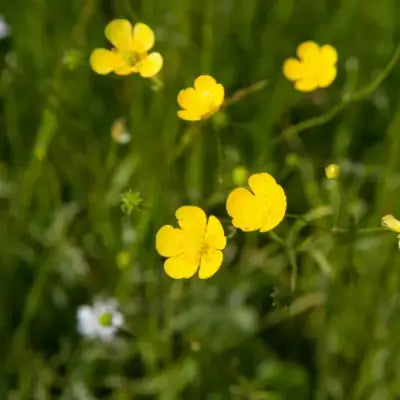
Creeping Buttercup – Traits, Development and Control Instructions
Creeping buttercup (Ranunculus repens) has become a worrying component of increasing concern in forestry, due to its rapid spread, stemming from its perennial nature, which allows it to live several years. Due to its growth form and potential to spread or invade and become a serious pest concern, it has the ability to not only beautify a garden, but terrify during the summer. What is also of concern, is the fact it can appear in open fields. Today, we will describe its features, how it grows, its impacts on the ecosystem, and methods of slip.
It is also accompanied by a set of remarkable traits. It does not take long to notice a buttercup from a distance, due to its showy, brilliant yellow, widely visible flower, which forms a large cluster during the blooming season. A flower on the buttercup is on the average 2 cm, and can grow 1 cm. A buttercup plant’s flower buttercup plant’s flower is connected to the long stem and sits at the top of it. It has a composite structure.
The leaves of the plant also show its remarkable beauty, with its cup daffodil flowers. Its leaves have three lobes, which makes it a trifoliate. It is also unique due to its resemblance to a shinier Clover, which sits adjacent to a prize garden. It is also recognized within the leaves of the plant, which is often seen as a dense mat of green herbaceous creeping buttercup’s leaves. The slender stems that grow from the plant, which we call creeping stems, during the summer, gain popularity due to the mat structure. They root at the nodes, increasing in strength.
Growth Patterns of Creeping Buttercup
Creeping Buttercup plants are, for starters, located mostly in wetlands, marshes, meadows, and are found at the riverside too. The buttercup does best in soil that is moistened and waterlogged and is able to multiply rapidly by seed and creeping vegetative runners. It undergoes a period of dormancy during the cold months and grows rapidly when the weather begins to warm up. Buttercups bloom between late springs and early summers.
Because of its favorable conditions, it can create a rather dense network of roots causing it to be deemed a weed. It can also be found in gardens, meadows, and lawns, due to the plant’s overpowering other plants.
Ecological Significance of Creeping Buttercup
Despite creeping buttercup getting nuisance status in some landscapes, it does serve vital functions to the ecosystem in which it grows. Everything creeping buttercup grows in assists in the prevention of soil erosion. It is the roots which provide the effectiveness for riverbanks, also the roots provide stability for hillsides that are prone to erosion.
Apart from that, creeping buttercup as a flowering plant, serves as an early flower for pollinators like bees and butterflies, thus helping to support biodiversity in these ecosystems.
Management Strategies for Creeping Buttercup
Although buttercup parts may benefit certain ecosystems, its presence in a garden may create difficulties. Following are some buttercup management strategies:
Cultural Control
One of the best defenses against creeping buttercup is a healthy, well-maintained lawn or garden. Adequate fertilization, watering, and mowing creates conditions unfavorable for buttercup establishment.
Mechanical Control
In smaller gardens, the creeping buttercup can be controlled manually, but the entire plant, along with the taproot, must be removed, or it will regrow.
Mulching
Heavy organic mulch can inhibit the growth of buttercup seedlings as it limits the availability of light needed for growth.
Chemical Control
In cases of severe buttercup infestations, the use of herbicides may be necessary. Care must be taken to use the appropriate herbicide as well as the correct method to avoid harming desirable plants.
Improving Drainage
Creeping buttercup will thrive in areas with standing water; thus, improving drainage in such areas will help in reducing the potential for growth.
Competition
Growing other dense ground covers or dense grasses can help constrain the invasion of creeping buttercup by outshading it and minimizing the availability of nutrients and sunlight.
Creeping Buttercup: Beautiful Yet Invasive
There’s more than one way to create a creeping buttercup-infested garden. One of the simplest methods is to watch a buttercup grow and let it bloom into the beautiful and understated flowering plant it is. With its yellow sunflower-like blooms and contrasting foliage, it is a perfect centerpiece in a garden. In truth, it can also be a perfect centerpiece to a lawn or a well-manicured field, effectively filled with invasive flowering plants. Knowing its delicate beauty is one thing, knowing how to fully appreciate it without letting it overcrowd the landscape is another. We need to understand its growing patterns, its ecological importance, and how to manage it properly.
Visit TN Nursery
Do you want to add more plants to your garden or learn how to manage and control weeds like creeping buttercup? TN Nursery is your best stop! We have extensive online offerings, including gardening plants and other useful tools, and expert consultation to ensure your garden can be a thriving one.
FAQs
Does creeping buttercup attract pollinators?
Creeping buttercup serves as an early spring flower for several pollinators as well. Some of the buttercup pollinators, which include many species of butterflies and bees, will easily identify and visit the bright yellow flowers. The plant is vital for the ecosystem as it helps to sustain the diverse fauna and flora.
Is creeping buttercup invasive?
Creeping buttercup's aggressive and invasive traits can be evident in lawns, gardens, and even crop fields. This is especially true in the stems and seeds region. The plant's invasive character enables the buttercup to overgrow and dominate the growth of other flora by monopolizing light, water, and nutrients. While this can be deemed a positive trait in a wetland setting with a risk of being eroded, the plant in other settings does need some control.
What are the benefits of buttercups?
For some, the creeping buttercup benefits are perceived from a different perspective. Rather than focusing on the flora, we can consider the region's soil. The buttercups assist in the retention of soil in place from being eroded in wetlands and riverbanks. The flowers, which are extremely attractive to pollinators, encourage and support the ecosystem too. There are some societies that believe in the medicinal properties of buttercups; nevertheless, caution is encouraged given the toxicity of the flowering plant.
Where is creeping buttercup native to?
Creeping buttercup comes from Europe and some parts of Asia, but it has also been widely spread to North America and other regions. It grows well in moist, temperate climates and is often found in marshes, meadows, and along rivers.
Should you remove creeping buttercups?
Whether you should remove creeping buttercup depends on where it is growing. It is often useful to remove it from a neat garden as it can dominate other plants. However, in its natural wetlands, it can be helpful with foundation because it stabilizes the soil and also offers food to various animals. Before making a decision to remove any plant, it is best to understand its ecosystem and its function in your peace.
Do buttercups attract hummingbirds?
Creeping buttercups and other types of buttercups have very few plants competing with them because the flowers of creeping buttercup, like all buttercups, do not pull a lot of hummingbirds. It is the plant with the tubular flowers that a hummingbird loves, like the trumpet vine or the fuchsia, because those plants offer nectar in a much easier and more accessible way.


